What to do after your well has been flooded
If flood water reached your well, assume it is contaminated. Leave the pump off until checked, use bottled water, then disinfect and test before you drink.
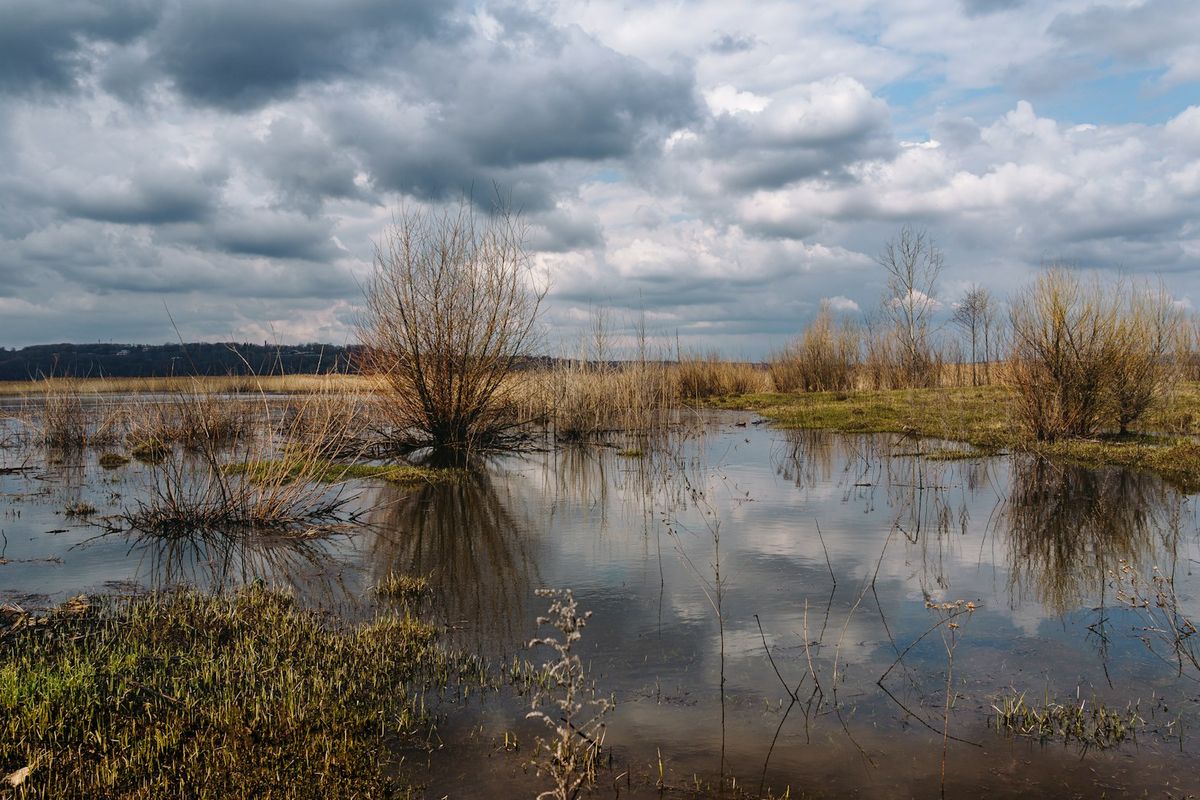
The short answer
If flood water reached your well or covered the top of the casing, assume the water is contaminated. Don't turn on the pump if it or its controls were under water: there is a risk of electric shock, and the wiring must be checked first. Use bottled or other safe water for drinking, cooking and brushing teeth. Once the well has been inspected, it needs to be pumped until clear, disinfected and tested for bacteria before you drink from it. Disinfection kills germs but does not remove chemicals such as fuel or pesticides.
- First rule
- Don't turn on the pump
- Drink meanwhile
- Bottled or safe water
- Test for bacteria
- 7–10 days after disinfecting
- Disinfection removes
- Germs only, not chemicals
Flood water carries whatever it flowed over: sewage, manure, fuel, chemicals. A well cap is not designed to keep it out, and the ground around the casing can channel it straight down. That is why the public health agencies all start from the same assumption: if flood water reached the well, the water is contaminated until a test says otherwise4.
Step 1: Stop drinking the water
Stop using the well for drinking and cooking2. Use bottled water, or water from another safe source, for drinking, cooking and brushing teeth until a test shows the well is clean3. EPA’s flood fact sheet also warns against washing with water from a flooded well1.
If fuel, heating oil or chemicals may have reached the well, don’t use it at all and call your local health department2. Disinfection does nothing for chemicals: EPA says it will not protect against pesticides, heavy metals and other non-biological contamination1, and Penn State says shock chlorination won’t remove nitrate, heavy metals or pesticides, and that boiling is no help if chemical contamination is suspected3. EPA asks you to report chemical drums or containers that have washed onto your property to the state or county health department1.
Step 2: Have the well and pump checked
Fast-moving flood water can carry debris that loosens well parts or bends the casing, and sediment can wear the pump; some wells even collapse1. EPA says wells more than 10 years old or less than 50 feet deep are likely to be contaminated even if there is no visible damage1.
Look, without touching any wiring, for debris, mud, erosion around the casing, a bent or cracked casing, and a loose or missing cap2. Repairs to the pump, casing or wiring are a job for a licensed well or pump contractor23. EPA says pumps that flood water has reached need cleaning of silt and sand, or they can burn out1.
Step 3: Pump the water until it runs clear
Once the system is safe to run, pump out the flood water. New York’s health department says to run the water until it is clear, sending it through an outside hose to a ditch or drainage area, not into the septic system, which may already be overwhelmed2. Depending on the well and how badly it was contaminated, that can take 30 minutes or several hours, even days2.
Step 4: Disinfect the well
EPA says drilled, driven or bored wells are best disinfected by a well or pump contractor, because it is hard for an owner to do it thoroughly1. New York recommends a contractor for point wells and wells with jet pumps2.
EPA’s emergency procedure for a flooded well, in outline1:
- If the water is muddy or cloudy, run an outside hose until it is clear.
- Pour non-scented household bleach into the well casing (EPA’s sheet uses one gallon), wearing rubber gloves and eye protection.
- Run water from an outside hose back into the casing until you smell chlorine at the hose.
- Open every cold tap, inside and outside, until each smells of chlorine, then close them. Put any water treatment equipment on bypass first.
- Wait 6 to 24 hours. Don’t drink, cook, bathe or wash with the water during this time.
- Flush the chlorinated water through an outside hose to a place where it won’t harm plants, streams or the septic tank, until the smell is gone.
New York’s procedure asks for at least 8 hours of contact, preferably 12 to 242. The bleach amount depends on the well’s size and water depth: our shock chlorination guide and calculator work it out for your well.
Well shock chlorination calculator How much plain bleach to use for your well’s size, water depth and bleach strength.Step 5: Test before you drink
- When. EPA suggests testing for bacteria 7 to 10 days after disinfection1. New York says to wait until the chlorine smell is gone, and to keep using bottled water until results confirm the water is clean2.
- What. Penn State recommends testing for coliform bacteria and E. coli, whose drinking water standard is zero, and for nitrate, whose limit is 10 mg/L3.
- Where. A certified lab or your local health department, which may supply sterile bottles12. Our well water testing guide explains how to find one.
- Again. New York suggests retesting after several weeks2. EPA warns that because of how groundwater moves after a large flood, a well may not be a safe source for many months, and that repeated testing is needed1.
If the test comes back positive, disinfect again and see our guide to coliform bacteria in well water.
Don’t forget the septic system
EPA says septic systems should not be used immediately after a flood: the drain field won’t work until the groundwater has dropped, and the lines may have broken1. Don’t pump the tank while the ground is saturated, because an emptied tank can float out of the ground5. Our guide to septic systems after heavy rain and flooding covers the steps.
Before the next flood
Penn State recommends a well casing that extends 12 inches above the ground with a watertight sanitary cap3. If your well sits in a low spot or its cap is not watertight, ask a licensed well contractor about upgrading it, and keep a record of the well’s construction and past test results: EPA says that information helps the health department judge water quality after a flood1.
Questions people ask
How do I know if my well was contaminated by the flood?
Minnesota's health department says to assume the well is contaminated if flood water reached it or covered the top of the casing. EPA adds that wells more than 10 years old or less than 50 feet deep are likely to be contaminated even if there is no visible damage.
Can I boil my well water after a flood?
Boiling kills germs but does nothing for chemicals, and Penn State says not to rely on boiling if chemical contamination is suspected. Until the well has been disinfected and tested, bottled water is the safer choice for drinking, cooking and brushing teeth.
How long after a flood can I drink my well water?
Only after the well has been disinfected and a lab test shows no bacteria. EPA's flood fact sheet suggests testing 7 to 10 days after disinfection, and warns that a well may not be a safe source for many months after a large flood, so repeat testing is wise.
Can I disinfect my well myself after a flood?
EPA says drilled, driven or bored wells are best disinfected by a well or pump contractor, because it is hard for an owner to do thoroughly. New York's health department recommends a contractor for point wells and wells with jet pumps. Our shock chlorination guide and calculator explain the process if you do it yourself.
Can I shower with the water before the test comes back?
EPA's flood fact sheet warns against washing with water from a flooded well, because people who drink or wash with it risk getting sick. Follow your local health department's advice.
What about my septic system after a flood?
EPA says not to use the septic system immediately after a flood, because the drain field won't work until the groundwater drops and lines may have broken. Don't pump the tank while the ground is saturated. Our guide to septic systems after heavy rain and flooding covers the steps.
Sources
We opened every source below and checked that it says what we cite it for. Numbers in the text, like 1, point to this list.
- 1 What to Do After the Flood (EPA 816-F-05-021) (opens in a new tab)
US Environmental Protection Agency (EPA) · Aug 2005, updated Oct 2024 · checked Oct 19, 2026
- 2 Restoring and Testing Your Private Well After a Flood (opens in a new tab)
New York State Department of Health · Revised Apr 2018 · checked Oct 19, 2026
- 3 Post-Flood Drinking Water Safety for Private Water Systems (opens in a new tab)
Penn State Extension · Updated Aug 30, 2024 · checked Oct 19, 2026
- 4 Flooding and Private Wells (opens in a new tab)
Minnesota Department of Health · Updated Oct 18, 2024 · checked Oct 8, 2026
- 5 Septic Systems - What to Do after the Flood (opens in a new tab)
US Environmental Protection Agency (EPA) · Updated Aug 24, 2026 · checked Oct 9, 2026
About this guide
Researched and written by Well & Field, an independent site run by Sergio Barragán, from public health agencies, university extension services and the other sources listed above. We are not well contractors or septic installers, and this guide is not a substitute for one. First published Oct 19, 2026; last reviewed Oct 19, 2026. How we research · Report an error